Slow down, recover, go again
A wellness recovery center on Memorial Boulevard in Murfreesboro.
Five things worth knowing before your first visit
Short, plain guides. No medical claims, no jargon.
Muscle Recovery
Understand soreness, how recovery works and what helps between hard sessions.
Stress and Relaxation
Practical ways to downshift after demanding days, and what to expect from a calm space.
Sleep and Routine
Evening habits and recovery routines that support better sleep.
Mobility and Movement
Gentle stretching and movement habits for stiffness, desk work and active days.
Your First Visit
What to ask, what to bring and how to choose a first session at a wellness recovery center.
What kinds of recovery needs do people bring?
Recovery needs often grow out of a full week, not a diagnosis. The useful question is what would make the next day more manageable.
A crowded training week
Runners, lifters, and people returning to activity often need a plan that leaves room between hard efforts. The national activity guideline is a broad health target, not a personal recovery prescription. A lower-load day, sleep, food, and an honest look at soreness can matter more than adding another intense session.
150 minutes (U.S. Department of Health and Human Services Physical Activity Guidelines)
A body that stays keyed up
Work, study, and caregiving can leave shoulders tense and attention scattered after the task is over. Some people use quiet space, slow breathing, or gentle movement as a transition. These habits may support calm, but ongoing anxiety, depression, or trauma symptoms need clinical support rather than a wellness visit alone.
6.4% (NIH National Center for Complementary and Integrative Health)
Evenings that do not settle
A shifting bedtime can make it difficult to see which habit is getting in the way. A repeatable wind-down and a quieter room are practical places to start. A recovery routine can be one cue in the evening, but it cannot diagnose or resolve a sleep disorder.
2,776 participants (NIH National Center for Complementary and Integrative Health)
Stiffness after sitting or driving
Long stretches at a desk, in class, or on the road can make movement feel less comfortable. Short movement breaks and gentle range-of-motion work are often easier to keep than a dramatic reset. Sharp pain, numbness, weakness, swelling, or symptoms that worsen with movement should be assessed by a clinician.
2 days per week (U.S. Department of Health and Human Services Physical Activity Guidelines)
What recovery approaches are commonly used?
Availability varies by center, so ask 1Self Wellness what it offers before assuming a particular service is on the menu. These are general approaches, with limits stated plainly.
A lower-load day
A lower-load day may mean easy walking, gentle mobility, or simply doing less than usual. It gives you room to check how you feel before piling on more work. It is not a reason to push through an injury that needs medical attention, and it does not have to involve a special service.
150 minutes (U.S. Department of Health and Human Services Physical Activity Guidelines)
Massage or bodywork
Massage is commonly used for comfort and wellness. NCCIH says evidence for some pain uses is weak or short term, and safety depends on the person and technique. Ask about training, pressure, contraindications, and what the center actually offers before booking. It should not delay care for pain or injury.
10.9% (NIH National Center for Complementary and Integrative Health)
Slow breathing or quiet rest
Slow breathing, guided imagery, and progressive muscle relaxation are practices people use to pause after stress. Research is promising in some areas but mixed overall, with many studies limited in size or quality. Use them as low-pressure support, not as a replacement for mental-health or medical care.
1,165 participants (NIH National Center for Complementary and Integrative Health)
Gentle mobility work
Mobility work can include controlled joint movements, an easy walk, or light stretching within a comfortable range. It is different from forcing a stretch. Evidence supports regular physical activity for general health, while the best movement choice depends on the person. Stop if movement causes sharp or escalating pain.
2 days per week (U.S. Department of Health and Human Services Physical Activity Guidelines)
Why a dedicated recovery space helps
Recovery starts with the basics
10.9% U.S. adults who reported massage use in 2022
Sleep, food, rest, and sensible pacing are the foundation of recovery. Wellness tools may fit around those basics, but they do not replace them or provide a medical assessment. Massage is one commonly discussed option, although exact services at 1Self Wellness are not confirmed. Ask what is available and whether it is appropriate for your health history.
Source: NIH National Center for Complementary and Integrative Health
A calmer routine can be repeated
6.4% U.S. adults who used guided imagery and/or progressive muscle relaxation in 2022
A brief cue, such as slow breathing, quiet time, or progressive muscle relaxation, can help create separation after a full day. It does not need to be perfect to be useful. These are supportive practices, not treatment for anxiety, depression, trauma, or another mental-health condition. Persistent distress deserves help from a qualified clinician.
Source: NIH National Center for Complementary and Integrative Health
Comfort and safety guide the choice
1,165 participants in a review of slow-breathing studies
Research on many recovery and relaxation approaches is mixed, varies by person, and does not replace clinical care. Start with what feels comfortable, share relevant information, and stop if something causes pain or dizziness. A clinician should guide decisions about an injury, unexplained symptoms, medications, pregnancy, mental-health concerns, or a diagnosed condition.
Source: NIH National Center for Complementary and Integrative Health
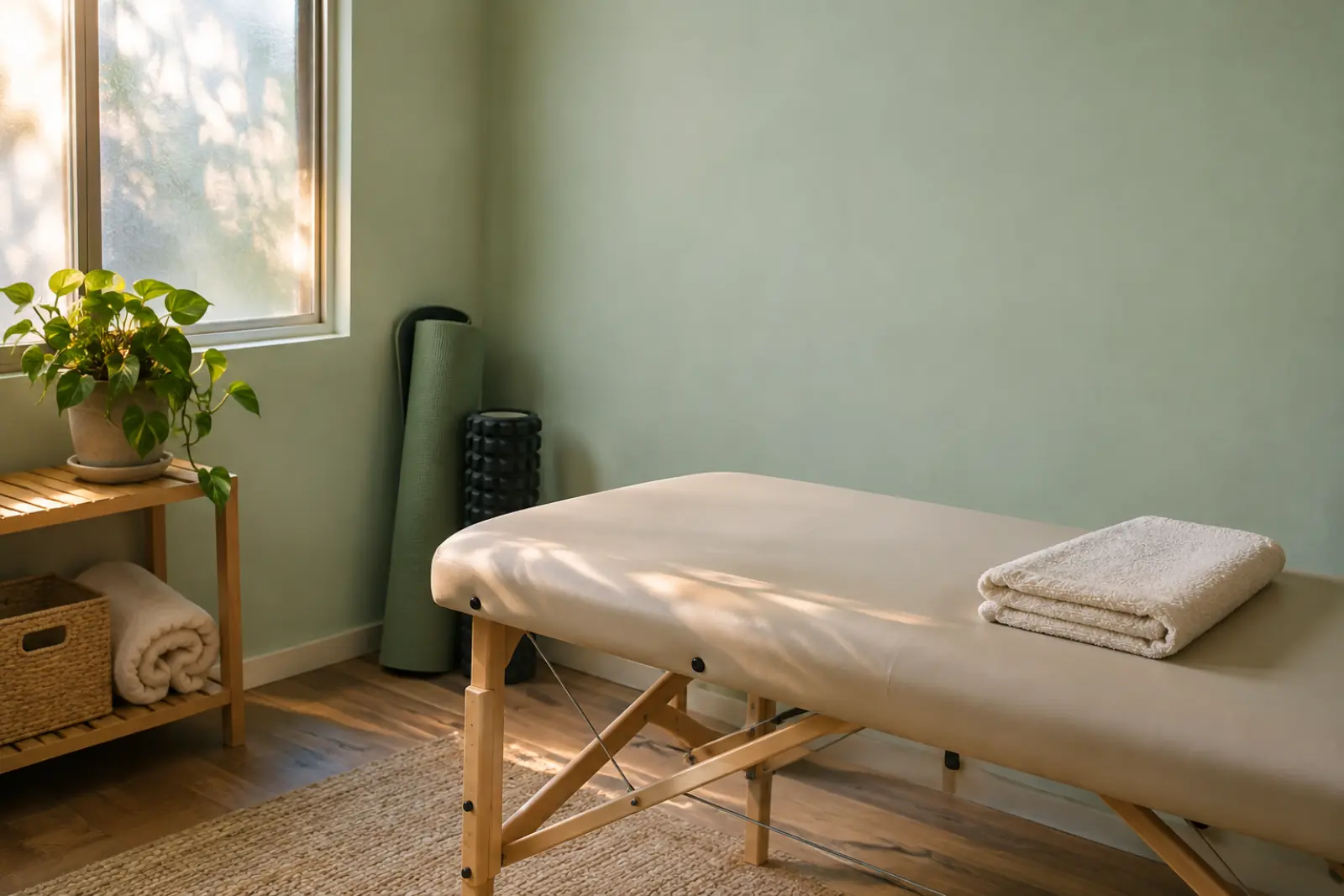
Close to campus, off the main strip
1Self Wellness is at 710 Memorial Blvd #120. Murfreesboro is home to Middle Tennessee State University, whose student body is over 20,000, so recovery between classes, practice and work is a common need here.
Common questions
What is a wellness recovery center?
It is a place to rest and recover after exercise or stress, usually with a calm space and recovery tools.
Is this medical care?
No. Recovery services support wellbeing and are not a treatment for medical conditions.
Who is it for?
Students, athletes, desk workers and anyone who wants a regular reset.
Where is it?
710 Memorial Blvd #120, Murfreesboro, TN 37129.